« November 12, 2006 - November 18, 2006 | Main | November 26, 2006 - December 2, 2006 »
November 23, 2006
The glitz of Dubai goes global

By Emily Flynn Vencat
It promises to be the epitome of Dubai glitz: a golf course cum ski resort rising from the desert sand, complete with towering glass and chrome conference buildings, exclusive shopping streets, luxury hotels, fake beachfronts, giant water parks and millionaires' gold-encrusted villas. But Emaar, Dubai's largest property group, isn't building this Arabian oasis anywhere near the United Arab Emirates.
This is Oukaimeden -- in Morocco. It's also a mirror image of what Dubai's three massive property pioneers -- Emaar, Dubai Holding and Dubai World -- are building in Syria, Pakistan, Jordan, Egypt, Lebanon, Libya, Turkey and half a dozen other developing countries around the world. Welcome to the places real-estate experts call "The New Dubais."
In the beginning, Dubai built man-made islands in the shape of a world map so large it can be seen from space. Now Dubai is re-creating the actual world in its own image. Its big three companies -- all chiefly owned by the ruling Maktoum family -- announced plans to build luxury real-estate projects worth $40 billion in Pakistan, including two giant man-made-island resorts off Karachi. With vast theme parks, giant malls and luxury residences, the Dubai style is designed to attract rich locals, expat tycoons and returning émigrés who have made a bundle abroad.
Source: [Newsweek]
Read more "The glitz of Dubai goes global "
Posted at 03:30 PM in Development, The Curious | Permalink | Comments (0) | TrackBack
The Lebanese crisis explained
 By Roger Hardy
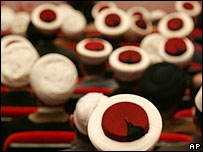
Lebanon is the most politically complex and religiously divided country in the Middle East, which is what makes it such a potentially explosive factor in an unstable region. Tiny Lebanon baffles outsiders. Even people in the Middle East find its politics confusing. Set up by France after World War I as a predominantly Christian state, Lebanon is now about 60% Muslim, 40% Christian.
It has 18 officially recognised religious sects and sharing power between them has always been a complicated game. Lebanese Muslims have tended to look east for support from the other Arab states and from Iran. The Christians have tended to look west to Europe and the United States.
The country's proximity to Israel - and the presence of a large number of Palestinian refugees on its soil - mean it is also intimately tied to the Arab-Israeli dispute. While Lebanon has plenty of problems of its own, it has also become the arena where many of the region's conflicts and rivalries are played out.
Source: [BBC]
Read more "The Lebanese crisis explained "
Posted at 11:00 AM in Analysis, La Revolutione | Permalink | Comments (0) | TrackBack
November 22, 2006
Egypt arrests another blog critic
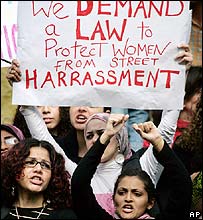 Police in Cairo have detained a blogger whose posts have been critical of the Egyptian government. Rami Siyam, who blogs under the name of Ayyoub, was detained along with three friends after leaving the house of a fellow blogger late at night.
No reasons have been given for Mr Siyam's detention. The other friends were released after being questioned. Human rights groups have accused Egypt of eroding freedom of speech by arresting several bloggers recently. BBC Arab Affairs analyst Magdi Abdelhadi says blogging in Egypt is closely associated with political activism in a culture where democratic freedoms are severely restricted.
In recent weeks, bloggers have been exposing what they say was the sexual harassment of women at night in downtown Cairo in full view of police who did not intervene. Mr Siyam's host on Saturday night, Muhammad Sharqawi, was detained for several weeks earlier this year.
Source: [BBC]
Read more "Egypt arrests another blog critic"
Posted at 07:00 PM in Disturbing report, La Revolutione, Weblogs | Permalink | Comments (1) | TrackBack
Artist displays Petra-inspired paintings in Washington
 By Natasha Twal Tynes
WASHINGTON, DC -- For Costa Rican artist Marité Vidales, a brief trip to Jordan in the summer of 2005 served as more than just mere tourism. It was in this trip where she found a muse in the Nabatean city of Petra. Her fascination with Petra started from the first time she laid eyes on it. "I have to paint something about this," Vidales told her husband as soon as they got there. Immediately, the artist and her spouse started taking various pictures of the red-rose city to document everything they saw.
"As I walked in the siq, everywhere I looked I began imagining paintings, in the niches, on the stained rocks and the textured and wind-worn columns," Vidales explained. "I imagined the colours slowly changing throughout time. As soon as I returned from Jordan, I began to paint these images, based on my photographs and memories. I wanted to reproduce and perpetuate the experience," she added.
Now over a year to her memorable trip, Vidales has completed 20 paintings depicting her fascination with this city. The drawings are currently being showcased at the Jordanian embassy in Washington, DC, in an exhibition, which opened here on Monday. Titled "Petra: Colours of Time," the exhibition, which is co-hosted by the Costa Rican embassy, will run through November 30.
Source [The Jordan Times]
Read more "Artist displays Petra-inspired paintings in Washington"
Posted at 11:15 AM in Jordan in the news | Permalink | Comments (0) | TrackBack
Europe's Muslims: Beyond the Veil

By Fareena Alam
The Dutch government just announced that it's seeking to ban the Muslim veil in public places. The Vatican has declared that veiling shows disrespect for local cultures and sensibilities. German officials in North Rhine-Westphalia say they will discipline Muslim teachers who wear headscarves in defiance of a ban imposed in May. In Britain, Jack Straw recently threw fuel on the fire by suggesting that this bit of traditional Muslim garb "separates people" and hinders integration.
"Communication requires that both sides see each other's face," said Britain's former foreign minister, displaying a mastery of cross-cultural sen-sitivity. "You not only hear what people say, but you also see what they mean." British Muslims immediately wondered how Straw's former cabinet colleague, ex-Home secretary David Blunkett -- blind since birth -- ever did his job.
Perhaps Straw did not intend to wound. But it had been a bad week already. Conservative leader David Cameron was taking jabs at what he called "Muslim ghettos." British tabloids railed about a Muslim cabby who allegedly refused to drive a blind woman because having her dog in the car offended his religious beliefs. Even Prime Minister Tony Blair couldn't hold his peace and called the veil a "mark of separation."
Source: [Newsweek]
Read more "Europe's Muslims: Beyond the Veil"
Posted at 12:52 AM in Features, Religion | Permalink | Comments (2) | TrackBack